
Omnichannel without fragmentation: 3 design rules
Most omnichannel rollouts end up multichannel — separate inboxes pretending to be unified. Three design rules to avoid the trap.
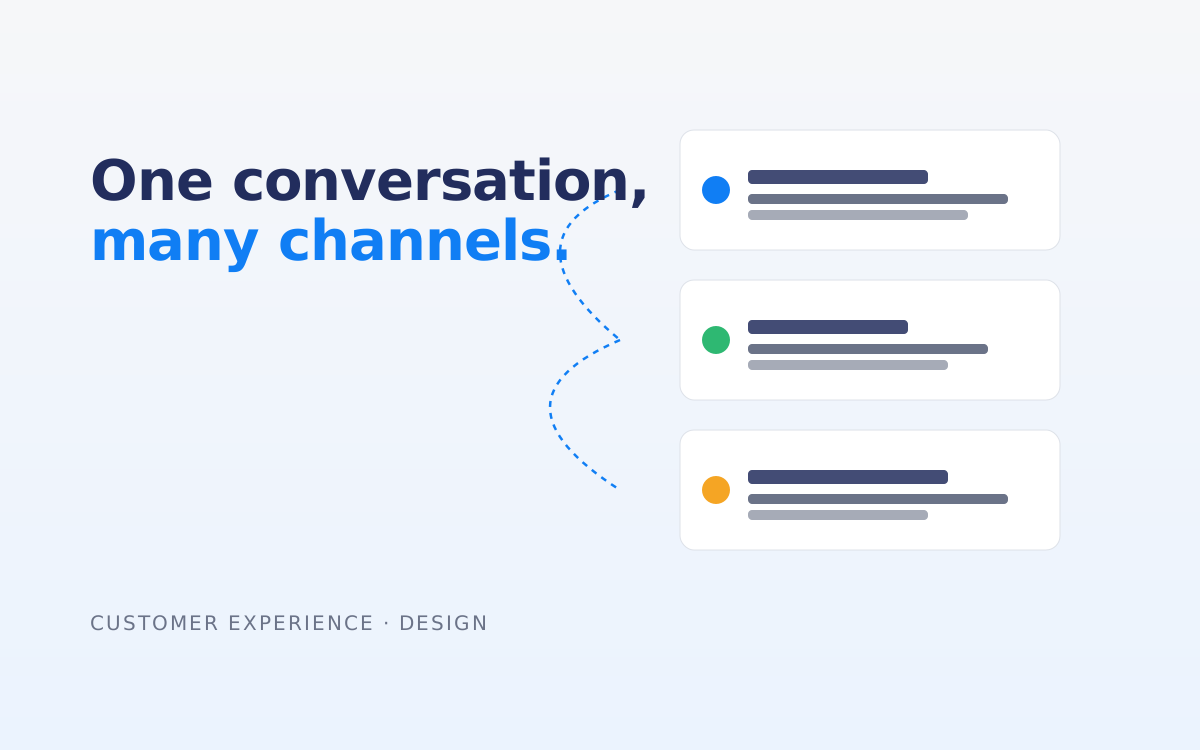
Most omnichannel rollouts end up as multichannel: separate inboxes painted the same color. The customer still repeats themselves. The agent still toggles. The reports still don't add up.
The difference comes down to three design rules that need to be true from day one — retrofitting any of them is painful.
Rule 1 — The conversation, not the channel, is the unit
If your data model has "WhatsApp tickets" and "email tickets," you've already lost. The customer doesn't think in channels. They think in conversations. A handoff from email to WhatsApp should be a continuation, not a new ticket.
Practical test: when a customer writes by email today and replies on WhatsApp tomorrow, does your agent see one thread or two?
Rule 2 — Context lives on the customer, not the channel
Phone number, email, account ID, deal ID — all of these should resolve to the same customer profile. Channel is metadata, not identity.
This is also a security boundary: a WhatsApp message from a known number shouldn't accidentally bypass the verification you'd require on a web chat. Channel sensitivity ≠ channel identity.
Rule 3 — Routing is a function of intent + context, not channel
"Send WhatsApp to team A, email to team B" is the lazy pattern. Real routing reads:
- Intent: what is the customer trying to do?
- Context: who is the customer (tier, history, sentiment)?
- Load: who can take it now?
If channel sneaks into the routing logic, your team will silently optimize for the wrong things — and the moment a new channel appears, you rewrite everything.
What's worth keeping channel-specific
Not everything is shared. Three things genuinely vary by channel and shouldn't be unified by force:
- Tone: WhatsApp is short, email is structured.
- Response time expectations: phone is seconds, email is hours.
- Compliance: SMS opt-in rules differ from email, WhatsApp has its own template approvals.
Build these as policies attached to the channel, not as branching logic in your business code.
TL;DR
If you remember nothing else: the customer is the unit, the conversation is the thread, the channel is the medium. Get those three right and "omnichannel" stops being a marketing word and starts being a real experience.